You Won’t Believe What I Found in Taupō’s Hidden Wild Places
Nestled in the heart of New Zealand’s North Island, Taupō is more than just a lakeside escape—it’s a cultural sanctuary guarded by Māori traditions and protected landscapes. I went searching for quiet trails, ancient forests, and sacred waters, and ended up discovering a deeper connection to the land. These protected areas aren’t just about conservation—they’re living expressions of culture, history, and respect. Every step through the misty bush, every pause by a murmuring stream, felt like an invitation to listen, to learn, and to tread gently. In a world where natural wonders are often reduced to photo ops, Taupō offers something rarer: a chance to travel with meaning, guided not by crowds, but by centuries-old wisdom.
The Soul of Taupō: Where Culture Meets Conservation
In Taupō, the land does not belong to people—people belong to the land. This fundamental belief, rooted in Māori worldview, shapes how natural spaces are protected and experienced. Unlike Western models of conservation that often separate humans from nature, Māori philosophy sees people as integral guardians of the environment. The concept of kaitiakitanga, or guardianship, is not a metaphor; it is a lived responsibility passed down through generations. It means caring for rivers, forests, and mountains not because they are scenic, but because they are ancestors, teachers, and sources of identity.
This deep connection is evident in how land around Lake Taupō is managed. Many areas are co-governed by local iwi (tribes) and government agencies, ensuring that ecological protection aligns with cultural values. For example, certain forested zones are closed during nesting seasons not only to protect birdlife but also because these times are considered spiritually significant. Decisions about track development, visitor access, and restoration projects are made with input from elders and knowledge holders, ensuring that cultural protocols are honored.
The lake itself, Lake Taupō, is more than a geological marvel formed by a massive volcanic eruption over 2,000 years ago. It is a taonga, a treasure imbued with ancestral stories and spiritual presence. The surrounding peaks, including Mount Tauhara, are seen as ancestral figures watching over the region. When visitors walk the trails or gaze across the water, they are moving through a landscape rich with narrative and meaning. Understanding this transforms tourism from passive sightseeing into active reverence.
Preserving nature in Taupō is not just about protecting biodiversity; it is about sustaining a worldview. When a native bird calls from the canopy, it is not merely a sound—it may be a sign, a message, or a reminder of connection. This holistic approach to conservation invites travelers to shift their perspective: to see the environment not as a resource, but as a relative. Such a mindset change is rare, but in Taupō, it is quietly encouraged at every turn.
Tongariro National Park: A Sacred Landscape Protected for Generations
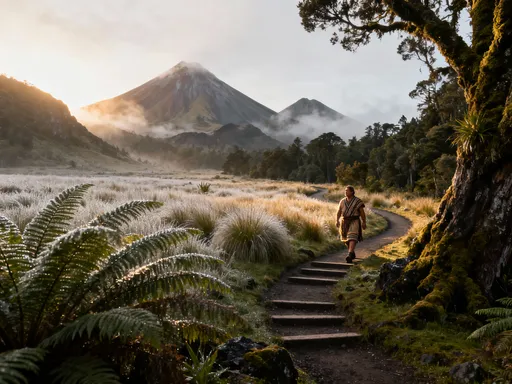
Just a short drive from Taupō lies Tongariro National Park, New Zealand’s oldest national park and a UNESCO World Heritage site recognized for both its natural and cultural significance. Spanning over 79,000 hectares, this volcanic landscape is home to three active peaks—Mount Ruapehu, Mount Ngauruhoe, and Mount Tongariro—each held sacred by the Ngāti Tūwharetoa iwi. The park is not just a geological wonder; it is a spiritual domain where the earth breathes, and the mountains are ancestors.
The 1887 deed of gift, in which paramount chief Te Heuheu Tūkino IV gifted the peaks to the nation, was not a transfer of ownership but an act of protection. The intention was to safeguard the mountains from exploitation while allowing respectful public access. Today, this vision lives on through co-management between the Department of Conservation and Ngāti Tūwharetoa. Every decision, from trail maintenance to visitor education, reflects a balance between preservation and shared experience.
The Tongariro Alpine Crossing, often ranked among the world’s greatest day hikes, draws thousands each year. Yet beyond the stunning views of red craters, emerald lakes, and steaming vents lies a deeper story. The Emerald Lakes, with their vivid hues caused by mineral deposits, are not just photo-worthy—they are spiritually significant. In Māori tradition, these waters are linked to purification and ritual. Climbing the mountain is not a conquest; it is a journey through sacred space.
Mount Ngauruhoe, famously known as Mount Doom in the Lord of the Rings films, is particularly tapu (sacred). While its dramatic cone tempts climbers, ascents are discouraged out of respect for its spiritual status. Signs at trailheads gently remind visitors of this, explaining that some places are not meant to be stood upon, only honored from afar. This respect is not symbolic—it is actively enforced through cultural protocols and guided interpretation.
Guided walks led by Māori rangers offer a richer understanding of the landscape. Visitors learn about traditional plant uses, the meaning behind place names, and the legends that shaped the terrain. Hearing the story of how the mountains were formed through the love and loss of the sky father and earth mother adds emotional depth to the physical experience. These narratives transform the hike from a physical challenge into a cultural immersion.
Tongariro is a living example of how spiritual values can shape environmental stewardship. The park’s protection is not just about preventing erosion or managing waste—it is about honoring a covenant between people and the land. When visitors follow the marked trails, stay on boardwalks, and listen to local voices, they become part of that covenant, however briefly.
Whanganui River: Paddling Through a Living Taonga (Treasure)
Flowing from the volcanic plateau to the Tasman Sea, the Whanganui River is New Zealand’s longest navigable waterway and one of its most culturally significant. In 2017, it made history by being granted legal personhood under the Te Awa Tupua Act, recognizing the river as an indivisible, living whole—from the mountains to the sea—with its own rights and interests. This groundbreaking legislation reflects the Māori belief that the river is not a resource, but an ancestor.
For centuries, the Whanganui iwi have traveled its waters by waka (canoe), using the river as a highway, a food source, and a spiritual pathway. Today, visitors can experience this journey through guided kayak or canoe trips that follow traditional routes. These are not thrill-seeking adventures; they are slow, reflective journeys through deep gorges, native bush, and quiet backwaters. The rhythm of the paddle, the call of the kererū (wood pigeon), and the ever-present flow of water create a meditative pace that contrasts sharply with modern life.
Several tour operators, often led by Whanganui descendants, offer multi-day trips that include camping on riverbanks, storytelling around fires, and lessons in river safety and etiquette. Participants learn to read the water’s moods, understand eddies and currents, and recognize signs of changing weather. More importantly, they are taught to approach the river with humility. Before launching, it is common to offer a karakia (prayer or incantation) to acknowledge the river’s presence and seek safe passage.
The river’s legal status means that any development, pollution, or misuse can be challenged in court on behalf of the river itself. This has led to improved water quality, restoration of riparian zones, and stronger enforcement of environmental laws. It also means that tourism must be carefully managed. Commercial operators must adhere to strict guidelines, including waste disposal protocols, group size limits, and cultural sensitivity training for staff.
One of the most powerful experiences on the river is passing Te Pōrere Redoubts, a historic site linked to the New Zealand Wars. While the focus here is not on conflict, the site is a reminder of resilience and continuity. Guides share stories of resistance and survival, connecting the past to present-day efforts to protect the river. These moments are not dramatized; they are offered with quiet dignity, allowing visitors to reflect without discomfort.
Paddling the Whanganui is not just a physical journey—it is an invitation to witness a new model of environmental protection. Where Western law sees nature as property, Māori worldview sees it as kin. By granting the river personhood, New Zealand has acknowledged that some relationships cannot be measured in economic terms. For travelers, this means leaving behind the mindset of ownership and embracing one of belonging.
The Bush Beyond the Lake: Exploring Native Forests with Māori Guides
Away from the bustling lakefront, Taupō’s hidden forests offer a different kind of retreat—one defined by silence, scent, and ancient life. Places like Hinemoria’s Reserve and the Waiatu Stream Track are not marked by grand entrances or visitor centers. They are accessed through quiet roads, signed with simple posts, and protected by local guardianship. These forests are home to towering rimu, fragrant mānuka, and the haunting song of the tūī, a native bird with iridescent feathers and a voice like liquid silver.
Walking these trails with a Māori guide transforms a simple hike into a cultural encounter. Guides do not merely point out plants and birds; they share whakapapa (genealogy) that connects species to ancestors and myths. The kauri tree, though more common in northern New Zealand, is spoken of with reverence, as a symbol of strength and endurance. The silver fern, or ponga, is not just a national emblem—it is a guide, its underside reflecting moonlight to show the way home.
One morning walk along the Waiatu Stream revealed the subtle signs of a healthy ecosystem: clear water, moss-covered stones, and the occasional glimpse of a native eel slipping beneath the surface. The guide paused often, not for breath, but to listen. “Hear that?” she asked, pointing to a high-pitched trill. “That’s the rifleman, our smallest bird. It’s been here longer than any of us.” Moments like these ground the visitor in the present, reminding them that this forest is not a museum, but a living community.
These guided experiences often include elements of forest bathing, a practice known in Japan as shinrin-yoku but deeply aligned with Māori ways of being. There is no need to name it—the act of standing quietly among trees, breathing in the damp earth and leaf litter, is instinctive. The guides encourage participants to touch the bark, smell the crushed leaves, and close their eyes to absorb the soundscape. This sensory engagement fosters a sense of connection that is hard to articulate but impossible to forget.
Some reserves are open only to guided groups, ensuring that fragile ecosystems are not disturbed. Others welcome independent walkers but request that visitors follow a simple rule: take only photos, leave only footprints, and carry out all waste. Signage is minimal and respectful, often written in both English and te reo Māori, reinforcing the dual heritage of the land.
The stillness of these forests is not empty—it is full of presence. For many visitors, especially those from cities, this quiet is initially unsettling. But with time, it becomes a gift. In the absence of noise, other senses awaken. The mind slows. The heart opens. And for a brief moment, one feels not like a tourist, but like a guest in a world that has existed long before and will endure long after.
Cultural Etiquette: How to Visit with Respect
Traveling in Taupō’s protected areas requires more than good footwear and a water bottle—it demands awareness and humility. Māori culture places great importance on manaakitanga (hospitality) and whanaungatanga (relationship-building), but these values are reciprocal. Visitors are welcomed, but they are also expected to show respect. This begins with understanding that not all places are meant for tourism, and not all knowledge is meant to be shared.
One of the most important practices is recognizing tapu, a concept often translated as “sacred” or “restricted.” Certain sites, such as burial grounds, ceremonial spaces, or places of spiritual significance, are tapu and may be closed to the public. Signs may not always explain why—respect means accepting this without demand for justification. Photography is often discouraged or prohibited in such areas, not out of secrecy, but out of reverence.
When visiting marae (communal meeting grounds) or cultural centers, removing shoes before entering buildings is a sign of respect. It is also customary to listen more than speak, especially during welcomes or storytelling. If a karakia is offered, standing quietly and attentively is sufficient; participation is not expected unless invited. These small acts acknowledge the host’s customs and create space for genuine connection.
Another key principle is kaitiakitanga in action: visitors are encouraged to act as temporary guardians of the land. This means staying on marked trails to prevent erosion, avoiding littering (including organic waste like fruit peels, which can introduce pests), and refraining from collecting natural materials like stones, shells, or plants. Even picking a flower can be seen as taking something that belongs to the ecosystem and its guardians.
Language also matters. Learning a few words of te reo Māori—such as kia ora (hello), whānau (family), or haere mai (welcome)—shows effort and respect. Many local businesses and guides appreciate the attempt, even if pronunciation is imperfect. It signals a willingness to engage, not just observe.
Ultimately, respectful travel is not about following a checklist, but about cultivating a mindset. It means approaching each place as a guest, not a consumer. It means recognizing that some stories are not yours to tell, and some views are not yours to claim. In Taupō, the most meaningful souvenirs are not bought—they are felt.
Sustainable Tourism in Action: What Works (and What Doesn’t)
Taupō’s popularity brings both opportunities and challenges. On one hand, tourism provides vital income for local communities and funds conservation efforts. On the other, overcrowding, litter, and trail erosion threaten the very qualities that draw visitors. The region’s response has been a blend of innovation, tradition, and tough choices—proving that sustainability is not just a buzzword, but a daily practice.
One successful initiative is the Department of Conservation’s track maintenance program, which employs local workers, including Māori youth, to repair boardwalks, clear invasive weeds, and monitor wildlife. These jobs not only preserve the environment but also strengthen community ties and pass on practical knowledge. Visitors often encounter these teams on the trails and are invited to learn about their work—turning maintenance into education.
Predator control is another critical effort. Introduced species like rats, stoats, and possums have devastated native bird populations. Through trap networks, bait stations, and community-led initiatives, conservationists are restoring balance. Some areas have seen a return of rare birds like the kākā and the North Island robin. Tourists can participate in citizen science projects, recording bird sightings or helping with trap checks, turning their visit into active stewardship.
Accommodations are also adapting. Eco-lodges powered by solar energy, built with sustainable materials, and designed to blend into the landscape are becoming more common. Many offer educational talks on local ecology and cultural history, ensuring guests leave with deeper understanding. Some require advance bookings and limit capacity to reduce environmental impact, prioritizing quality over quantity.
However, challenges remain. The Tongariro Alpine Crossing, while carefully managed, faces pressure from high visitor numbers. Shuttle services, trail congestion, and waste management are ongoing concerns. In response, authorities have introduced a booking system during peak seasons, limiting daily entries and ensuring better crowd control. This has improved safety and reduced environmental strain, though some travelers find it inconvenient—a necessary trade-off for long-term protection.
Not all tourism practices are sustainable. Helicopter tours, while popular, generate noise pollution and carbon emissions. Some operators offer “landing experiences” on remote peaks, raising ethical questions about access to sacred sites. Similarly, off-road vehicle tours in sensitive areas can damage vegetation and disturb wildlife. These activities are legal but increasingly scrutinized, with calls for stricter regulation.
The key lesson from Taupō is that sustainability requires balance. It means supporting businesses that align with conservation goals, choosing low-impact activities, and being willing to wait, walk farther, or pay more for responsible options. When tourism dollars go to Māori-owned enterprises, community projects, or conservation trusts, they become part of the solution, not the problem.
Why These Places Matter: A Call to Protect More Than Scenery
The protected areas around Taupō are not just beautiful—they are essential. They preserve more than trees, birds, and waterways; they safeguard language, identity, and ancestral knowledge. In a rapidly changing world, these landscapes are anchors—places where tradition is not performed, but lived. When a child learns the name of a bird in te reo Māori, when a guide shares a story passed down for generations, when a visitor pauses in silence to honor a mountain, culture continues.
True travel enrichment does not come from checking destinations off a list. It comes from understanding that every place has a story, and that some stories are not ours to own, but to receive with gratitude. Taupō invites travelers to move beyond sightseeing and into stewardship—to see conservation not as a duty, but as a relationship.
The vision for the future is not one of untouched wilderness, but of shared responsibility. It is a world where visitors come not to take, but to learn. Where tourism supports, rather than exploits. Where the concept of kaitiakitanga is not limited to Māori, but embraced by all who walk the land.
So the next time you plan a journey, ask not just where you want to go, but how you wish to arrive. Will you come as a consumer, or as a guest? Will you leave only footprints, or will you also leave respect? In Taupō, the land is watching. And it remembers who treated it well.