Where Art Eats: How Malaga’s Flavors Became My Favorite Masterpiece
You know that feeling when a place just gets you? Malaga did that to me—but not in the way I expected. I went for the Picasso, stayed for the pisto, and left with a heart full of Andalusian soul. This isn’t just a city of museums and sunsets; it’s a living canvas where every tapas bar tells a story, and every bite feels like a brushstroke. Art here doesn’t hang on walls—it sizzles on grills, bubbles in stews, and dances on your tongue. In Malaga, creativity isn’t confined to galleries; it flows through alleyways scented with garlic and saffron, echoes in the clink of wine glasses at family-run bodegas, and reveals itself in the careful arrangement of olives on a wooden board. This is a city where flavor and form are one, and every meal becomes a quiet masterpiece.
First Impressions: A City Painted in Light and Flavor
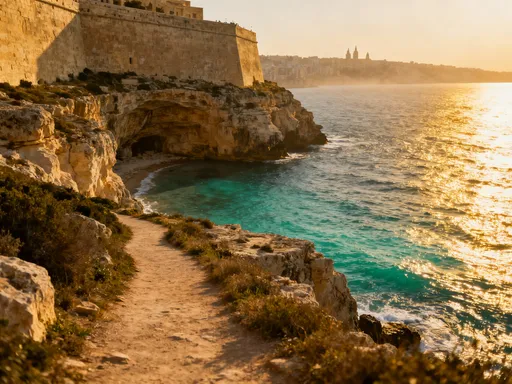
From the moment you step off the train or glide down from the airport along the coastal road, Malaga greets you with light—golden, soft, almost liquid in its warmth. The city rests on the southern edge of Spain’s sun-kissed Costa del Sol, where the Mediterranean Sea laps gently against ancient stones and modern life moves at a rhythm that feels both relaxed and deeply intentional. The whitewashed buildings climb the hills in cascading tiers, their walls glowing under the Andalusian sun like strokes from a master’s palette. Bougainvillea spills over balconies in bursts of magenta and violet, and the scent of orange blossoms lingers in the air, especially in the early mornings when the city stirs slowly, like an artist stretching before the day’s work.
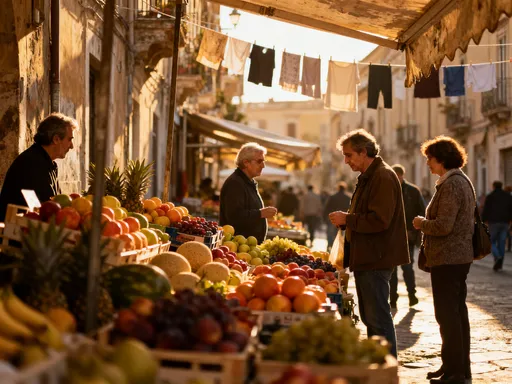
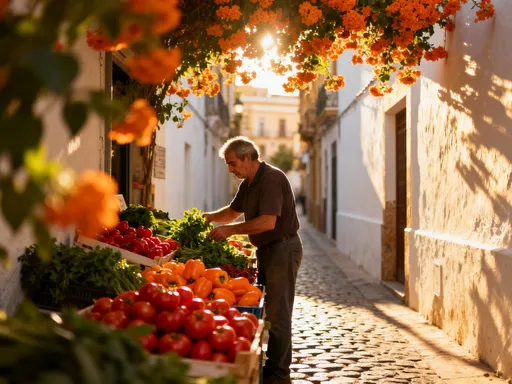
But what strikes you first isn’t just the beauty—it’s the harmony. Malaga doesn’t impress with grand gestures or flashy attractions. Instead, it invites you in through subtlety: the way sunlight filters through the iron canopy of the Atarazanas Market, the soft murmur of Spanish drifting from open café doors, the unhurried pace of locals sipping coffee at sidewalk tables. There’s an artistry in the everyday here, one that reveals itself gradually. You notice it in the precise way a vendor stacks ripe tomatoes—red, firm, arranged like jewels. You see it in the hand-painted tiles that line the walls of family-run eateries, each one a tiny, colorful testament to generations of craftsmanship. This is a city where aesthetics aren’t reserved for museums—they’re embedded in the fabric of daily life.
And then there’s the food. Even before you’ve settled into your hotel, you’re surrounded by it. The smell of grilled sardines drifts from beachside stalls. Bakeries display golden empanadas filled with tuna and hard-boiled eggs. In the plazas, old men gather over glasses of sweet Malaga wine, nibbling on anchovies and toasted almonds. It becomes clear quickly: in Malaga, eating isn’t just sustenance. It’s ritual, connection, expression. Every dish tells a story—of the sea, of the sun-drenched hills, of families gathered around long tables on Sunday afternoons. This seamless blend of art and appetite is what makes Malaga so unique. It’s not just a destination for art lovers or foodies—it’s a place where both passions merge into a single, vibrant experience.
The Picasso Plate: How Local Dishes Mirror Andalusian Artistry
It’s no accident that Pablo Picasso was born in Malaga. The city’s creative spirit is palpable, not only in its galleries and street art but in the way its people approach food. Just as Picasso’s work evolved from classical realism to bold abstraction, Malaga’s cuisine balances tradition with fearless expression. The flavors are intense, layered, often surprising—much like a painting that reveals new details the longer you look. There’s a raw honesty in the cooking here, a refusal to hide behind pretense. What you taste is what is real: sun-ripened tomatoes, briny olives, garlic crushed with the back of a knife, fish so fresh it still tastes of the sea.
Consider the humble espeto de sardinas, a staple along Malaga’s waterfront. Sardines are speared on cane skewers and grilled over open flames on the beach, their skin crisping as the scent of wood smoke mingles with sea air. The dish is simple—no elaborate sauces, no fancy plating—yet it’s deeply evocative. It calls to mind one of Picasso’s early charcoal drawings: minimal in form, rich in emotion. There’s beauty in its imperfection, power in its directness. Each bite carries the essence of the Mediterranean, a flavor as vivid as a bold stroke of black on white paper.
Then there’s ajada, a rich fish stew simmered with garlic, paprika, and olive oil. Its deep amber color and robust aroma are reminiscent of the chiaroscuro technique seen in Andalusian religious paintings—light and shadow dancing in contrast. The garlic infuses the broth with warmth, while the olive oil, a cornerstone of Malaga’s agriculture, adds silkiness and depth. This isn’t just food; it’s a sensory narrative. Every ingredient serves a purpose, much like every brushstroke in a masterpiece. Even the way it’s served—often in a rustic clay pot—echoes the region’s pottery traditions, connecting the meal to centuries of craftsmanship.
And let’s not forget pisto malagueño, a vegetable medley of tomatoes, peppers, zucchini, and eggplant, slow-cooked until tender and fragrant. Unlike its cousin ratatouille, Malaga’s version often includes a poached egg on top, its yolk bleeding golden into the mix. The dish is colorful, comforting, and deeply satisfying—like a still-life painting come to life. It’s food that doesn’t just feed the body but comforts the soul, a reminder that beauty can be found in simplicity, in the quiet act of preparing something with care.
From Market to Table: A Morning at Atarazanas Market
No visit to Malaga is complete without a walk through the Atarazanas Market, a 19th-century iron-and-glass structure that feels like stepping into a living gallery. Originally built on the site of Arab shipyards—atarazanas means “shipyard” in Arabic—the market is a fusion of history, culture, and flavor. As you pass under its ornate entrance, decorated with intricate horseshoe arches and mosaics of local fish, you’re greeted by a symphony of colors, scents, and sounds. This is where Malaga’s culinary artistry begins—not in restaurants, but in the daily ritual of selecting ingredients with intention and pride.
Stalls overflow with seasonal abundance: pyramids of plump olives marinated in herbs, baskets of figs so ripe they split open, heaps of saffron threads that glow like threads of gold. Fishmongers display sea bream, monkfish, and red prawns on beds of ice, their scales catching the light like mosaics. One vendor arranges razor clams in a perfect spiral, each shell glistening with seawater. It’s hard not to think of a still-life painting—Caravaggio or Zurbarán—where every object is placed with symbolic care. Here, the market isn’t just a place to shop; it’s a stage where food is honored as art.
What makes Atarazanas special isn’t just the quality of the produce, but the relationships that unfold within it. Vendors know their customers by name. An elderly woman selects artichokes while exchanging news about her granddaughter’s wedding. A chef from a nearby restaurant haggles playfully over the price of squid. The air is thick with laughter and the scent of fresh basil. This sense of community is integral to Malaga’s food culture. Cooking isn’t a solitary act—it’s a shared tradition, passed down through generations, shaped by conversation and care.
For visitors, wandering through Atarazanas is an education. You learn to appreciate the ripeness of a peach by its scent, the freshness of fish by the clarity of its eyes. You begin to see how seasonality shapes the menu, how a dish in spring differs from one in autumn. And if you’re lucky, a vendor might offer you a taste—olives soaked in sherry vinegar, a sliver of jamón ibérico on a piece of crusty bread. These small moments of generosity remind you that in Malaga, food is more than fuel. It’s a language of hospitality, a way of saying, “You are welcome here.”
Tapas as Performance: The Rhythm of Bar-Hopping in Soho
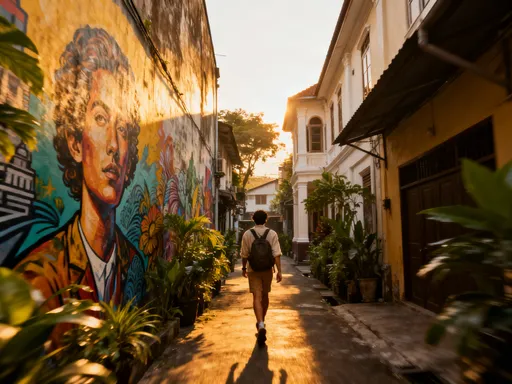
If Atarazanas is the heart of Malaga’s food culture, the Soho district is its pulse. Once an industrial quarter, Soho has transformed into a hub of creativity, where street art covers old factory walls and independent galleries showcase emerging artists. But the true spectacle happens at street level, in the tapas bars that line narrow cobblestone streets. Here, the culinary experience becomes a performance—one that unfolds over hours, across multiple stages.
Tapas culture in Malaga is social, rhythmic, almost choreographed. Locals don’t sit down for one long meal. Instead, they move from bar to bar, sampling small plates, sharing stories, sipping wine or crisp local vermouth. Each stop is a new act in an evening of improvisation. At one bodega, you might find boquerones en vinagre—marinated white anchovies—served on a slate with edible flowers and a drizzle of olive oil. The presentation is minimalist, elegant, like a sculpture in a modern art museum. At another, a chef might hand you a warm mollete sandwich filled with fresh cheese and roasted peppers, served with a wink and a “¡Buen provecho!”
What makes tapas so special is the interaction. You stand at the counter, shoulder to shoulder with strangers, laughing as someone spills wine or mispronounces a dish. The bartenders are performers in their own right—flipping tortillas, slicing jamón with practiced precision, recommending pairings with the confidence of curators. There’s no rush, no pressure. Time slows. Conversations deepen. A simple plate of fried almonds becomes a moment of connection.
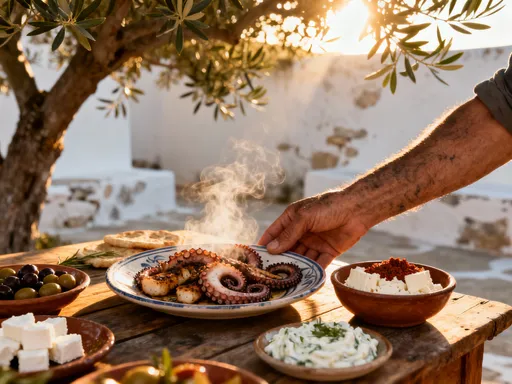
Soho’s tapas scene also reflects Malaga’s evolving identity. While traditional dishes remain beloved, chefs are experimenting—adding unexpected ingredients, reimagining textures, playing with presentation. You might find salmorejo—a thicker cousin to gazpacho—served in a shot glass with a dusting of smoked paprika, or grilled octopus paired with orange segments and fennel. These innovations don’t erase tradition; they build on it, much like a contemporary artist reinterpreting a classic theme. In Soho, food isn’t static. It’s alive, changing, responding to the moment—just like art.
Hidden Kitchens: Dining with Local Artists
One of the most unforgettable experiences in Malaga isn’t listed in guidebooks or marked on maps. It happens behind closed doors, in the homes and studios of local artists who open their kitchens to curious travelers. Through a chance introduction, I was invited to a private dinner in the workshop of a ceramicist in the historic center. Her studio was filled with unfinished pots, painted tiles, and shelves of glazes in every shade of blue and ochre. In the corner, a large clay pot simmered on a portable burner—inside, gazpacho malagueño, a regional variation made creamy with ground almonds and sweetened with green grapes.
We ate at a long wooden table, seated on mismatched chairs, our drinks served in hand-thrown cups. The food was simple but extraordinary: grilled vegetables drizzled with local olive oil, fresh sardines with lemon, and a dessert of honey-drizzled churros dusted with cinnamon. But what made the evening magical was the conversation. As we passed dishes around, the ceramicist spoke about how cooking and pottery are, to her, the same act of creation. “When I shape clay, I’m listening to it,” she said. “When I cook, I’m listening to the ingredients. Both require patience, presence, love.”
These hidden gatherings are a testament to Malaga’s spirit of generosity. Artists here don’t hoard their talents—they share them. They invite you into their world, not for profit, but for connection. In these intimate settings, food becomes more than nourishment. It becomes an exhibition, a performance, a collaboration. You’re not just eating—you’re participating in a living tradition where art and life are inseparable.
Other travelers have similar stories: a flamenco dancer who hosts weekly dinners with live music, a painter who serves paella in his sunlit courtyard, a fisherman’s wife who shares her family’s recipe for arroz negro while teaching guests how to roll the perfect paella pan. These experiences aren’t curated for tourists. They’re authentic, spontaneous, rooted in real relationships. And they reveal a truth about Malaga: its greatest masterpieces aren’t in museums. They’re in homes, in kitchens, in moments of shared humanity.
The Taste of Tradition: Family Recipes and Slow Food Culture
Just a short drive from the city center, nestled in the hills where olive groves stretch toward the horizon, I met an elderly couple who embody Malaga’s commitment to culinary heritage. Their home, a modest whitewashed house with a terracotta roof, sits at the edge of a small village where life moves at the pace of the seasons. In their kitchen, a wood-fired stove heats a cast-iron pot where migas—a traditional breadcrumb dish—is slowly cooking. The aroma of garlic, paprika, and rosemary fills the air, mingling with the sound of a radio playing old Andalusian ballads.
Migas is humble fare, born from the need to use stale bread. But in their hands, it becomes something profound. They toast the crumbs until golden, then fry them with chorizo, garlic, and scraps of leftover meat. It’s served with reverence, accompanied by a glass of young red wine. As we eat, the woman tells me the recipe has been in her family for over a century. “My grandmother taught my mother, who taught me,” she says. “Now I teach my granddaughter. It’s not just food. It’s memory.”
This slow, intentional approach to cooking is central to Malaga’s food culture. In a world that often values speed and convenience, here, time is an ingredient. Meals are prepared with care, shared with family, savored over hours. Dishes are passed down like heirlooms, each one carrying stories of harvests, celebrations, losses, and love. This isn’t fast food—it’s soul food. And it’s a direct reflection of the region’s artistic values: patience, attention to detail, respect for tradition.
Yet tradition here isn’t stagnant. Just as Picasso redefined art, Malaga’s cooks are reinterpreting old recipes with new techniques and global influences. You’ll find migas served with roasted vegetables in upscale restaurants, or salmorejo topped with salmon tartare. These evolutions don’t erase the past—they honor it by keeping it alive. Like a painting restored and rehung, the essence remains, but the context changes. In Malaga, food is never frozen in time. It’s a living, breathing expression of culture—always evolving, always rooted.
Why Malaga Changes How You See Food—And Art
Leaving Malaga, I realized I hadn’t just collected memories—I’d undergone a shift in perception. The city taught me to see food not as a separate experience from art, but as one of its purest forms. Whether it’s a fisherman grilling sardines on the beach, a grandmother stirring a pot of stew, or a chef plating a modern tapa, each act is an artistic gesture. There’s intention, emotion, skill. There’s beauty in the process, not just the result.
Malaga challenges the idea that art belongs only in galleries. Here, creativity is democratic, woven into daily life. It’s in the way a vendor arranges fruit, the way a family gathers around a table, the way a community celebrates a harvest festival with music and shared meals. This integration of art and life is what makes the city so nourishing—for the body and the spirit.
For travelers, especially those seeking authenticity, Malaga offers something rare: a place where culture isn’t performed for visitors, but lived. You don’t need to be an artist to feel inspired. You just need to be present—to taste, to listen, to connect. And in that presence, you begin to see your own life differently. Maybe cooking dinner for your family isn’t just a chore. Maybe it’s a form of love, a small masterpiece. Maybe setting the table isn’t routine—it’s curation. Malaga doesn’t just change how you see food. It changes how you see yourself.
In a world that often separates the practical from the beautiful, Malaga reminds us they can coexist. The most meaningful art isn’t always framed or sold. Sometimes, it’s served on a plate, shared with laughter, and remembered long after the last bite.
Malaga doesn’t just feed the body—it feeds the imagination. Its true masterpiece isn’t a single painting, but a living culture where art and appetite are inseparable. To visit is not just to see, but to savor, to feel, to create. And in that, it offers one of travel’s rarest gifts: a place that changes how you see the world—one bite at a time.