Art, Alleys, and Slow Strolls: Daegu’s Hidden Creative Soul
You know that feeling when you stumble upon a quiet alley painted with stories, and suddenly a city reveals its soul? That’s Daegu I discovered—far from the rush, deep in the rhythm of slow travel. Forget crowded landmarks; here, art spaces breathe life into old neighborhoods, quiet galleries whisper creativity, and every coffee cup feels like part of the canvas. This isn’t just sightseeing—it’s feeling a city pulse through its people, colors, and hidden corners. Daegu, South Korea’s fourth-largest city, often passes beneath the radar of international travelers drawn to Seoul’s buzz or Busan’s coastal charm. Yet beneath its unassuming surface lies a creative current, flowing through alleys, markets, and quiet studios. This is a city that rewards patience, curiosity, and the willingness to wander without an agenda. In a world increasingly driven by speed, Daegu offers something rare: the chance to slow down and truly see.
Why Slow Travel Fits Daegu Perfectly
Daegu is not a city that reveals itself in snapshots. Its essence unfolds gradually, like the first light of dawn creeping across a painted wall. Unlike Seoul, where the pace of life surges like a subway train, or Busan, where the ocean breeze carries a sense of constant motion, Daegu moves to a different rhythm—one of quiet industry, enduring tradition, and subtle transformation. This measured tempo makes it an ideal destination for slow travel, a philosophy centered on immersion, presence, and meaningful connection. Travelers who embrace this approach often find that Daegu’s rewards are not in ticking off attractions but in lingering long enough to notice the details: the way sunlight hits a mosaic on a side street, the murmur of conversation in a neighborhood café, or the faint scent of ink in a small print studio.
What sets Daegu apart is its ability to balance the old and the new without spectacle. The city has long been known for its textile industry and traditional markets, yet in recent decades, it has nurtured a quiet but determined artistic renaissance. Abandoned buildings have been reimagined as cultural spaces, and community-led initiatives have revitalized neglected districts. This evolution is not driven by tourism campaigns or global branding, but by local passion and a desire to preserve identity in the face of modernization. As a result, the art scene in Daegu feels authentic, grounded, and refreshingly free of commercial pretense.
Slowing down allows visitors to engage with this evolution on a human scale. Rather than rushing from one landmark to the next, a slow traveler might spend an hour watching an elderly vendor arrange dried persimmons at Seomun Market, then later pause to chat with a young artist installing a sculpture in a converted warehouse. These moments of connection—small, unplanned, and deeply personal—are what make Daegu memorable. The city does not demand attention; it invites participation. And in that invitation lies its quiet power.
Dongseongno: Where Street Life Meets Artistic Energy
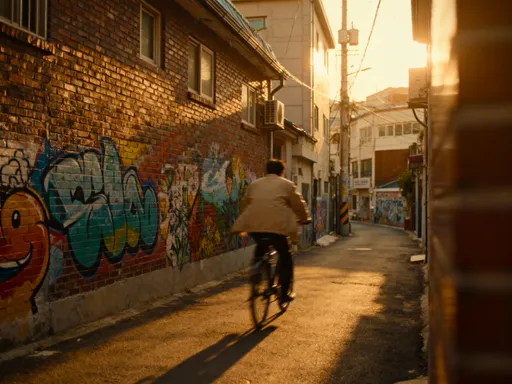
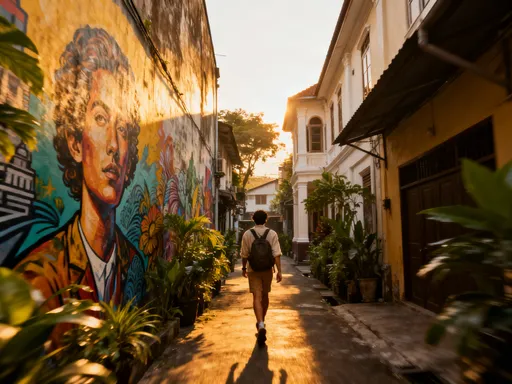
If Daegu has a cultural spine, it is Dongseongno, the historic downtown district that has long served as the city’s commercial and social heart. Once a bustling shopping avenue lined with retro department stores and neon signs, Dongseongno has evolved into a vibrant canvas for urban art and creative expression. Today, the street pulses with a unique energy—a blend of nostalgia and innovation that defines much of Daegu’s artistic character. Murals stretch across building facades, transforming blank walls into storytelling surfaces. Some depict historical figures from Korean folklore, while others celebrate local legends or reimagine everyday scenes with surreal flair. These works are not isolated installations; they are part of a living dialogue between the city’s past and its present.
Walking through Dongseongno feels like flipping through the pages of an open-air art book. Independent boutiques display handmade jewelry and upcycled fashion, while small galleries showcase experimental photography and mixed-media pieces. Retro signage from the 1970s and 80s still dots the skyline, their faded glow adding to the district’s layered aesthetic. These visual echoes of the past are not preserved as museum artifacts but are integrated into the current cultural fabric, creating a sense of continuity. The district’s transformation has been organic, led in part by local artists and supported by municipal efforts to promote cultural tourism without overdevelopment.
One of the most compelling aspects of Dongseongno is its accessibility. Unlike art districts in larger cities that can feel exclusive or curated for tourists, this neighborhood remains deeply rooted in daily life. Office workers grab lunch at noodle stalls tucked between galleries, and students gather in pocket parks to sketch or read. The best time to visit depends on the kind of experience you seek: mornings offer a quieter atmosphere, ideal for observing the interplay of light and shadow on painted walls, while evenings bring a livelier crowd and the occasional pop-up exhibition or street performance. Whether you come for the art or simply to soak in the ambiance, Dongseongno reminds us that creativity thrives not in isolation, but in the rhythm of everyday life.
EBS Art Center: A Hub for Thoughtful Creativity
Nestled in the Dalseo-gu district, the EBS Art Center stands as a testament to Daegu’s commitment to nurturing emerging artistic voices. Operated in association with the Educational Broadcasting System (EBS), this cultural complex goes beyond traditional exhibition spaces by emphasizing experimental media, digital storytelling, and youth-driven creativity. At its heart is the EBS Dream Theater, a modern venue that hosts student film screenings, animation festivals, and interactive media installations. What makes this space unique is its focus on process over product—here, the journey of creation is as important as the final artwork.
The surrounding art complex features rotating exhibitions that often highlight interdisciplinary work, blending video art, soundscapes, and digital design. Many of these exhibitions are free to the public, reflecting a strong commitment to accessibility and community engagement. Open-air screenings during the spring and fall draw local families, students, and art enthusiasts, turning the plaza into a shared cultural space. The programming frequently centers on social themes—identity, environment, technology—encouraging viewers to reflect on contemporary issues through a creative lens.
Perhaps most significantly, the EBS Art Center serves as an incubator for young Korean artists who might otherwise struggle to find platforms outside Seoul. By providing studio access, mentorship opportunities, and exhibition space, the center supports creators working beyond commercial trends. This emphasis on thoughtful, non-commercial art fosters a culture of experimentation and risk-taking. Visitors often encounter works that are raw, introspective, or conceptually challenging—qualities that may not appeal to mass audiences but are essential to a healthy artistic ecosystem.
For the slow traveler, a visit to the EBS Art Center is not just about viewing art but about witnessing the future of Korean creativity in formation. It’s a place where ideas are still in motion, where the boundaries between artist and audience blur, and where the value of art is measured not in market price but in its ability to provoke thought and inspire dialogue.
Seomun Market and Its Unexpected Artistic Layers
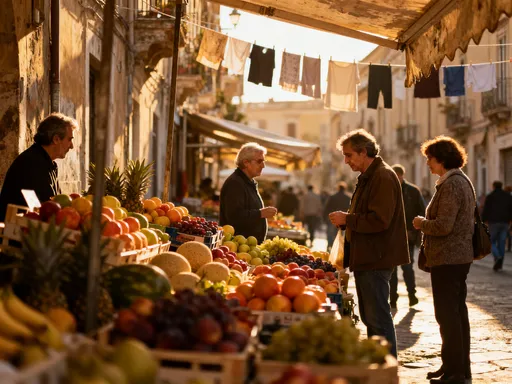
Seomun Market, one of South Korea’s oldest and largest traditional markets, is often celebrated for its food and textiles. But for those who look closely, it is also a living gallery of texture, color, and craftsmanship. Spanning several blocks in central Daegu, the market is a sensory tapestry—rows of dried fish glisten under fluorescent lights, bolts of hanbok fabric cascade in vibrant patterns, and the scent of grilled skewers mingles with the earthy aroma of medicinal herbs. To the hurried visitor, it may seem purely functional. Yet within this daily commerce lies a deep well of artistic inspiration.
Local artists have long drawn from the market’s rich visual language, incorporating its textures into installations, photography, and textile art. Some have created mixed-media pieces using discarded packaging, old receipts, or fabric scraps, transforming mundane materials into evocative works. Others document the market’s rhythms through long-exposure photography, capturing the blur of movement and the quiet moments between transactions. These artistic interpretations do not remove the market from its context but deepen our appreciation of it as a cultural artifact.
Moreover, Seomun has become a site of creative preservation. Traditional crafts such as knot-making, embroidery, and natural dyeing are still practiced by elderly artisans, many of whom welcome curious visitors. In recent years, younger designers have begun collaborating with these masters, reinterpreting traditional techniques in contemporary fashion and home goods. This fusion of old and new ensures that heritage skills remain alive, not as static relics but as evolving forms of expression.
For the slow traveler, wandering through Seomun is an exercise in observation and empathy. It’s about noticing how a vendor folds a bundle of perilla leaves with practiced precision, or how sunlight filters through the market’s canopy at midday. These details, often overlooked, are the quiet brushstrokes of Daegu’s artistic soul. By engaging with the market not just as a shopper but as a witness, visitors become part of its ongoing story.
Hidden Galleries in Residential Neighborhoods
While Daegu’s main districts offer accessible cultural experiences, some of its most profound artistic moments occur off the beaten path—in quiet residential neighborhoods where art exists not for spectacle but for connection. Areas like Buk-gu and Suseong-gu are home to a network of small, independent galleries, often run by artists themselves. These spaces are unmarked by grand facades or promotional banners. Instead, they inhabit converted hanok houses, repurposed warehouses, or even private living rooms opened to the public for limited exhibitions.
What distinguishes these galleries is their intimacy. Without the noise of crowds or the pressure of commercial sales, they offer a space for quiet contemplation. The curation is personal, often reflecting the artist’s own journey or community concerns. Exhibitions might focus on themes like urban memory, environmental change, or the passage of time, expressed through painting, sculpture, or found-object assemblage. Because these spaces operate outside the mainstream art market, they allow for greater creative freedom and vulnerability.
Visiting these hidden galleries requires a different kind of tourism—one based on respect, humility, and openness. There are no entrance fees, no audio guides, and sometimes no staff present. Instead, interaction often happens organically: a neighbor might invite you in for tea, or the artist might appear to discuss their work. These moments of human connection are central to the experience. They remind us that art is not just something to be consumed but something to be shared.
For travelers, finding these spaces often involves word-of-mouth recommendations, local art maps, or simply wandering with curiosity. The journey itself becomes part of the discovery. There is no rush, no checklist—just the pleasure of stumbling upon beauty in unexpected places. In a world where art is increasingly commodified, these quiet galleries stand as a quiet resistance, proving that creativity thrives in simplicity and sincerity.
Art Cafés: Where Creativity and Comfort Collide
In Daegu, the boundary between art and daily life often dissolves in the city’s growing number of art cafés—spaces where specialty coffee, quiet reading, and rotating exhibitions come together in harmonious balance. These cafés are more than just places to drink; they are cultural microcosms, fostering a relaxed yet thoughtful atmosphere where creativity is not displayed behind glass but woven into the fabric of everyday experience. Shelves hold art books and poetry collections, walls feature works by local painters, and the background music is carefully curated to complement the mood of the space.
Many of these cafés collaborate with nearby galleries or artist collectives, hosting monthly exhibitions, poetry readings, or small workshops. Some rotate their artwork every few weeks, turning the café into a dynamic, ever-changing gallery. The effect is subtle but powerful: art becomes part of the ritual of pausing, sipping, and reflecting. Customers are encouraged not to rush but to linger, to let their thoughts wander as freely as the steam from their coffee cups.
The social fabric of these spaces is equally important. Regulars—artists, students, retirees—form informal communities, exchanging ideas over lattes or sketching in notebooks. For visitors, these cafés offer a gentle entry point into Daegu’s creative scene, a place to observe, listen, and slowly absorb the city’s rhythm. There is no pressure to perform or participate; simply being present is enough.
These art cafés reflect a broader cultural value in Daegu: the belief that beauty and meaning can be found in the ordinary. By integrating art into spaces of comfort and routine, the city democratizes creativity, making it accessible to all. In doing so, it challenges the notion that art belongs only in museums or elite circles. Here, it belongs in the quiet corner of a neighborhood café, waiting to be discovered by anyone willing to sit still and look closely.
Putting It All Together: Crafting Your Own Art-Focused Slow Journey
Planning an art-focused journey through Daegu is less about scheduling and more about setting an intention. The city does not lend itself to rigid itineraries; instead, it rewards a flexible, open-hearted approach. A suggested three- to four-day visit might begin in Dongseongno, where morning light enhances the colors of the murals. Spend a few hours wandering, pausing at independent shops and cafés, allowing yourself to be drawn to unexpected details. In the afternoon, head to the EBS Art Center to experience curated digital and experimental works, perhaps catching an open-air screening at dusk.
The second day could be dedicated to Seomun Market and its surroundings. Visit early to avoid the midday rush, and take time to observe the textures, sounds, and rhythms of the market. Engage with vendors, sample local snacks, and look for artistic interventions hidden in plain sight. Later, explore a nearby residential neighborhood, using local art maps or community recommendations to find small galleries. Allow for spontaneity—some of the best discoveries happen when you get slightly lost.
On day three, focus on immersion. Choose one or two art cafés to spend extended time in, bringing a notebook or sketchpad if you wish. Let the atmosphere guide you. In the evening, consider attending a small cultural event—perhaps a poetry reading or live acoustic performance—often advertised on community boards or social media by local organizers.
Throughout your stay, prioritize walking and public transit. Daegu’s subway and bus system is efficient and well-connected, making it easy to move between districts without the stress of driving. But the true magic happens on foot, where every alley, doorway, and patch of sunlight becomes part of the experience. Cultivate a mindset of presence: put away your phone, silence notifications, and let yourself be fully in each moment. Ask questions when appropriate, smile at strangers, and allow the city to unfold at its own pace.
Conclusion
Daegu doesn’t shout its beauty—it murmurs it through alleyway murals, hushed galleries, and the steam rising from an artist’s coffee cup. By choosing slow travel, you don’t just see the city’s art spaces—you become part of their quiet rhythm. This is how cities truly reveal themselves: not in grand gestures, but in the stillness between brushstrokes. In Daegu, art is not confined to institutions or special events; it lives in the everyday, woven into the streets, markets, and homes of its people. To visit with intention, patience, and curiosity is to witness a city that values depth over spectacle, connection over consumption. And in that quiet revelation, travelers find not just inspiration, but a deeper understanding of what it means to truly see.