You Won’t Believe What I Ate in Mykonos – It’s Not Just About the Beaches
When you think of Mykonos, chances are you picture whitewashed houses, crystal-clear waters, and non-stop parties. But honestly? The real magic happens on your plate. I went searching for sun and ended up falling headfirst into a world of rich flavors, family-run tavernas, and dishes passed down for generations. Mykonos isn’t just a paradise for party lovers—it’s a hidden gem for food lovers too. The island’s culinary rhythm is deeply tied to its history, landscape, and people. Beyond the postcard-perfect alleys and buzzing beach clubs lies a quieter, more intimate experience: one served on rustic wooden tables, shared with laughter, and rooted in centuries of tradition. This is a journey not just through taste, but through time.
Arrival in Mykonos: First Bites and First Impressions
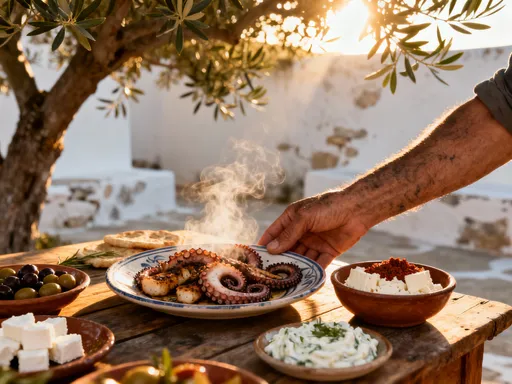
The moment I stepped off the ferry and into the heart of Chora, the capital of Mykonos, I was greeted not by loud music or crowded souvenir shops, but by the scent of charred octopus grilling over open flames. It curled through the labyrinth of cobblestone alleys like an invisible thread, pulling me toward a small seaside kafenio where locals sat sipping strong Greek coffee in the late afternoon sun. There was no menu board in English, no digital QR code—just a chalkboard scrawled with Greek script and a server who smiled and said, 'Try the mezze. It’s what we eat today.'
That first meal became my introduction to the island’s unpretentious generosity. A wooden platter arrived, laden with dolmades stuffed with rice and dill, creamy tzatziki, olives from a nearby grove, and thick slices of village bread. Beside it came a small bowl of kopanisti, a pungent, spicy whipped cheese made from sheep’s milk, its pinkish hue hinting at the chili flakes folded into it. Each bite carried the imprint of the Aegean—salty, sun-kissed, alive. I hadn’t even checked into my hotel, yet I already felt welcomed, not as a tourist, but as a guest.
Later that evening, wandering through the quieter streets of Little Venice, I met an elderly woman selling homemade rusks from a basket outside her door. 'For the fishermen,' she explained in halting English. 'They take them on boats—lasts for days.' She offered me one with a slice of tomato and a drizzle of olive oil. It was humble, almost austere in its simplicity, yet deeply satisfying. That moment crystallized what I would come to understand about Mykonian food: it’s not about extravagance, but about care, tradition, and the wisdom of making the most of what the land and sea provide.
The Heart of the Kitchen: Traditional Dishes That Define the Island
Mykonos’ cuisine is a study in restraint and reverence. With limited arable land and a history of self-reliance, the island’s food culture evolved around preservation, seasonality, and resourcefulness. The dishes that define it are not born of excess, but of necessity—transformed over generations into something exquisite. At the center of this culinary identity is kopanisti, a cheese so bold it demands attention. Made from aged sheep’s or goat’s milk cheese, whipped with vinegar, thyme, and hot peppers, it’s often spread on warm bread and served with a glass of crisp white wine. Its tangy bite lingers, a flavor that speaks of sunbaked hills and strong island winds.
Another cornerstone of the Mykonian table is stamnagathi, a wild green foraged from rocky slopes in early spring. Bitter and vibrant, it’s typically boiled and dressed with lemon juice and olive oil. Locals believe it cleanses the blood after winter, a natural tonic passed down through oral tradition. I joined a small group of women one morning as they combed the edges of a dry riverbed, their hands deftly plucking the slender leaves. 'You have to know where to look,' said Maria, a retired schoolteacher. 'And you have to respect the land. Take only what you need.'
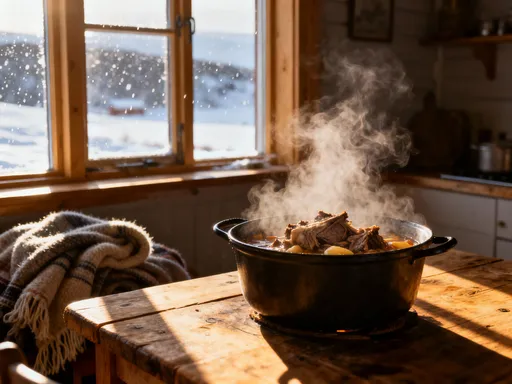
Perhaps the most celebrated dish is slow-cooked lamb with lemon and oregano, traditionally roasted in a wood-fired oven for Sunday family meals. I was invited to witness this ritual in a home kitchen in Ano Mera, the island’s inland village. Inside a whitewashed house with blue shutters, Yiayia Eleni moved with quiet precision, seasoning the meat with salt, pepper, and wild herbs gathered from her garden. As the lamb roasted for hours, the aroma filled the courtyard, drawing neighbors who stopped by to chat. After the meal, she showed me how to fold a phyllo pie—her hands guiding mine as we layered paper-thin dough with feta, spinach, and dill. 'This is how I learned from my mother,' she said. 'And this is how my granddaughter will learn from me.' In that moment, the kitchen wasn’t just a place of cooking—it was a living archive of memory and love.
Beyond the Tourist Menu: Finding Authentic Eateries Off the Beaten Path
While the waterfront of Alefkandra is lined with restaurants boasting panoramic views and Instagrammable plating, the most memorable meals I had were in places without signs, websites, or even formal names. One morning, I followed a local recommendation to a family-run taverna just outside Ano Mera. There were no menus in English, no prices listed—just a shaded courtyard with mismatched tables and a chalkboard in Greek. The owner, a man named Dimitris, greeted me with a nod and brought a carafe of house wine while his wife prepared the day’s special: grilled sardines caught at dawn, served with a simple horiatiki salad and oven-roasted potatoes.
What struck me wasn’t just the quality of the food, but the rhythm of the place. Families arrived late for lunch, children playing under olive trees while grandparents sipped ouzo. There was no rush, no pressure to turn tables. Meals unfolded over two, sometimes three hours, punctuated by laughter and long pauses. I learned that the fish had been brought in by a cousin who fished from a small wooden boat near Ftelia Beach. The potatoes were grown in Dimitris’s brother’s field. The olive oil came from their own grove, pressed last autumn.
These details matter. To find authentic Mykonian dining, look beyond the brochures. Seek out places where the menu changes daily, where ingredients are named by village or season. Notice whether locals eat there—especially older residents, who are less likely to indulge in tourist fare. Handwritten Greek menus, handwritten prices, and a lack of digital presence are often better indicators of authenticity than any online review. And don’t be afraid to point and smile—many owners are happy to guide you through the offerings, especially if you show genuine interest. In these unmarked spots, you’re not just eating; you’re being let in on a quiet secret.
From Farm to Table: Meeting Local Producers and Fishermen
The true soul of Mykonos’ cuisine lives in its supply chain—or rather, the absence of one. Unlike mass-touristed islands that rely on imported goods, Mykonos still operates on a hyper-local model, where what you eat today was likely harvested or caught within a ten-mile radius. One morning, I rose before sunrise to meet Giorgos, a fisherman in his sixties who has been setting nets near Ftelia since he was a boy. His boat, painted blue with peeling letters that spelled 'Agia Triada,' rocked gently in the calm sea as he pulled in his catch: red mullet, squid, and a few large sea bream. 'The sea gives what it wants,' he said, sorting the fish with practiced hands. 'We don’t force it.'
Later that day, I visited a small goat farm in the hills above Fanari. Run by a husband-and-wife team, the farm produces just enough milk to make soft cheese and yogurt for local tavernas and weekend markets. The goats grazed freely on wild thyme and sage, their diet contributing to the distinct flavor of the dairy. 'We don’t pasteurize,' said Elena, the farmer’s wife. 'We believe in raw taste—what nature intended.' She handed me a spoonful of fresh yogurt, drizzled with local honey. It was cool, tangy, and floral, a taste I hadn’t realized could exist outside of memory.
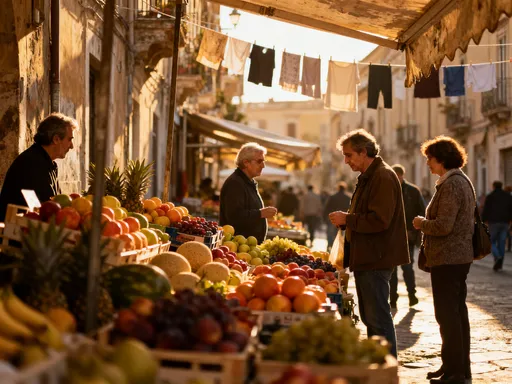
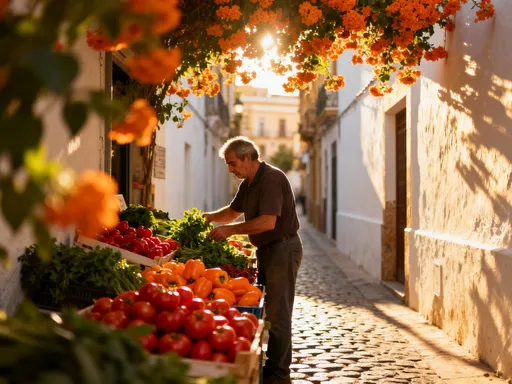
Back in Chora, I spoke with a produce vendor at the morning market who summed up the philosophy: 'We don’t grow for tourists—we grow for us. They’re just lucky to taste it.' This sentiment echoed across conversations with fishermen, bakers, and cheesemakers. Their work isn’t shaped by seasonal demand or foreign palates; it’s guided by tradition, sustainability, and a deep connection to the island. When you eat in Mykonos, you’re not consuming a performance for visitors—you’re participating in a way of life that has endured for centuries.
The Social Plate: How Food Brings People Together in Mykonos
In Mykonos, meals are not transactions—they are events, often stretching late into the night, blurring the lines between stranger and friend. The meze culture, where small plates are shared among the table, is more than a dining style; it’s a social contract. One evening, I found myself at a seaside taverna in Agios Stefanos, seated at a long wooden table with two couples from Athens and a solo traveler from Sweden. No one knew each other, yet within an hour, we were passing plates, recommending dishes, and toasting with shots of raki. A platter of grilled octopus made the rounds, followed by stuffed calamari, gigantes plaki (giant beans in tomato sauce), and fried zucchini flowers. Wine flowed freely, poured from carafes without labels.
The rhythm of the meal was unhurried, almost meditative. There were no timers, no reminders that the restaurant needed the table. Instead, the owner joined us for a cigarette between courses, sharing stories of summers past. At one point, a local musician arrived with a bouzouki and began to play. Someone started singing. Others clapped. I didn’t understand the words, but I felt their warmth. This, I realized, was the heart of Greek dining: food as a bridge, not a destination.
Another night, after buying a loaf of bread from a small bakery in Ano Mera, I struck up a conversation with the baker, who invited me to her home for dinner. Her sister had prepared a feast—lamb stew, spanakopita, roasted peppers, and a dessert of galaktoboureko, a custard-filled phyllo pastry. We ate in the courtyard under string lights, surrounded by neighbors who dropped by unannounced. No one brought gifts. No one checked their phone. The focus was on presence, on savoring each bite and each moment. In a world that often feels fractured, Mykonos reminded me that connection is still possible—and that it often begins with a shared plate.
Modern Twists: How Chefs Are Reinventing Tradition
While the island honors its culinary roots, a new generation of chefs is quietly reimagining them. In a boutique restaurant tucked behind the windmills of Chora, I met Nikos, a Mykonian-born chef who trained in Athens and Copenhagen before returning home. His menu pays homage to tradition but interprets it with modern precision. One dish featured ancient grains like spelt and emmer, cooked in lamb broth and topped with foraged stamnagathi and a poached egg. Another reimagined kopanisti as a mousse, served with grilled sourdough and a drizzle of thyme honey. 'I don’t want to change the soul of our food,' he said. 'I want to show it in a new light.'
Across town, a small bar in Alefkandra is crafting cocktails that taste of the island itself. Their signature drink, the 'Aegean Breeze,' combines local raki with fresh lemon juice, a sprig of wild oregano, and honey from a nearby apiary. Even the ice is made with filtered seawater, adding a subtle salinity. These innovations don’t replace tradition—they complement it, offering curious travelers a way to engage with local flavors in a new context.
What’s remarkable is how these modern interpretations are received. Locals don’t see them as threats to authenticity; instead, they view them as evolution. 'Our grandmothers cooked with what they had,' said Maria, the forager I met earlier. 'Now our children cook with what they know. Both are true.' The balance is delicate, but Mykonos has managed it well—honoring the past while making space for the future. For visitors, this means a richer experience: you can savor a centuries-old recipe at a village taverna and, the next night, enjoy a reinvented version at a stylish rooftop bar, both feeling equally genuine.
Bringing Mykonos Home: Lessons in Simplicity and Joy
Leaving Mykonos, I carried more than souvenirs. I carried a new understanding of what it means to eat well—not just with good ingredients, but with intention. The island taught me that flavor doesn’t come from complexity, but from care. A tomato doesn’t need to be plated artistically to be delicious; it just needs to be ripe, fresh, and shared. The Mykonian way of eating is a lesson in mindfulness: slow down, savor, connect.
Back home, I’ve started building my own version of a meze spread—small plates of hummus, marinated olives, grilled vegetables, and homemade tzatziki, served with warm pita and a bottle of Greek wine. I’ve sought out local farmers’ markets to find the freshest ingredients, prioritizing seasonal produce over convenience. I’ve even attempted a simple phyllo pie, though mine doesn’t fold as neatly as Yiayia Eleni’s. The process, though, brings me back to her kitchen, to the sound of laughter and the smell of baking dough.
More than recipes, Mykonos gave me a mindset. It showed me that food is not just fuel, but a language of love, memory, and belonging. It reminded me to cook not for perfection, but for presence. To invite friends even when the table isn’t perfectly set. To let meals unfold without an agenda. In a world that often feels too fast, too loud, too fragmented, the rhythm of Mykonian life offers a gentle alternative: eat simply, live deeply, and always leave room for one more at the table.
The true flavor of Mykonos isn’t just in its dishes—it’s in the way food slows time, opens hearts, and turns strangers into family. It’s not just what’s on the plate that matters, but what happens around it. And that, perhaps, is the most unforgettable taste of all.