You Won’t Believe These Urban Secrets Hiding in Sicily
Sicily isn’t just beaches and ancient ruins—its cities are alive with energy, color, and unexpected charm. I wandered through sun-drenched streets, stumbled upon hidden courtyards, and felt the pulse of daily life in vibrant markets and piazzas. This is urban Sicily: raw, real, and totally underrated. If you think you know the island, wait until you see it from this side. Beyond the postcard-perfect coastlines and UNESCO temples lies a world of layered history, living culture, and quiet resilience. Here, the past isn’t preserved behind glass—it breathes in the rhythm of daily life, echoes in the laughter spilling from trattorias, and reveals itself in the texture of weathered stone and hand-painted tiles. This is a journey into the heart of Sicily’s urban soul.
The Beating Heart of Palermo
Palermo is not a city for the faint of heart. It does not gently welcome visitors with orderly streets or quiet plazas. Instead, it rushes at you in waves—of sound, scent, and color. The historic center, a UNESCO World Heritage site, is a labyrinth where Norman palaces stand shoulder to shoulder with Ottoman-influenced markets, and Baroque facades rise above fruit carts and espresso stands. Every alley tells a story, not just of conquest and culture, but of survival and reinvention. To walk through Palermo is to witness centuries of history unfolding in real time, where the past is not preserved but lived.
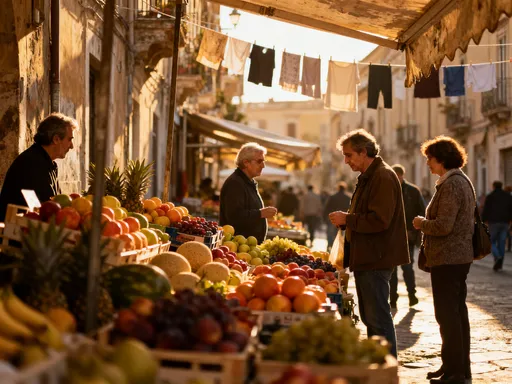
At the core of this urban pulse are the open-air markets—Vucciria, Ballarò, and Capo. These are not tourist attractions staged for cameras; they are vital organs of the city’s daily rhythm. Vucciria, once a bustling hub of commerce and music, now hums with a grittier energy. Stalls overflow with blood oranges, capers from Pantelleria, and glistening swordfish. Vendors call out in rapid Sicilian, bargaining with locals who know exactly which stand has the ripest figs or the freshest ricotta. The scent of fried panelle—chickpea fritters—mingles with the sharp tang of aged pecorino. It’s chaotic, yes, but also deeply human.
Walking is the only way to truly absorb Palermo. Cars clog the narrow streets, but on foot, you begin to notice the details: a 12th-century arch tucked between a laundromat and a kebab shop, a mural of Saint Rosalia glowing above a fishmonger’s stall, the sound of a nonna calling to her neighbor from a wrought-iron balcony. The city rewards curiosity. Behind an unassuming door in the Kalsa district, you might find the Oratorio di San Lorenzo, home to Caravaggio’s breathtaking “Nativity with St. Francis and St. Lawrence”—a painting stolen in 1969 and still missing, yet the chapel remains a place of quiet reverence.
Palermo’s beauty lies in its contradictions. A grand cathedral, blending Norman, Gothic, and Arab-Norman architecture, stands just steps from a graffiti-covered housing project. This is not a flaw—it’s the essence of the city. Its resilience is written in the way residents adapt, repurpose, and rebuild. In recent years, community-led initiatives have transformed abandoned buildings into art spaces, and local guides offer walking tours that spotlight the city’s multicultural roots. Palermo doesn’t pretend to be polished. It is honest, unfiltered, and alive.
Catania’s Volcanic Edge
If Palermo is a symphony of layered history, Catania is a sonata composed in black stone and fire. Nestled on the eastern coast, the city lies in the shadow of Mount Etna, Europe’s most active volcano. Its presence is constant—not just in the smoky plumes visible on clear days, but in the very fabric of the city. The historic center, rebuilt after the devastating 1693 earthquake and subsequent eruptions, is a UNESCO site defined by its use of lava stone. Buildings, piazzas, and even street curbs are carved from this dark, porous rock, giving Catania a dramatic, almost theatrical character.
This relationship with Etna is not one of fear, but of coexistence. Catania’s people speak of the volcano with a mix of respect and familiarity, like a powerful relative who can be generous or destructive. When Etna erupts, ash falls like snow, coating cars and rooftops. Yet life continues. Fishermen still head out at dawn, students sip coffee in the Piazza Università, and vendors sell roasted chestnuts in the Mercato di San Carlo. The city has learned to adapt, turning geological risk into cultural identity.
The fish market, La Pescheria, is the best place to feel Catania’s pulse. It opens before sunrise, a whirlwind of shouting vendors, glistening octopus, and the sharp cry of seagulls. Silver anchovies are laid out like jewels, red mullet glisten under fluorescent lights, and eels twist in tubs of seawater. This is not a sanitized seafood counter—it’s raw, visceral, and utterly authentic. Nearby, the morning granita stands begin their day, serving crushed ice flavored with almond, lemon, or coffee, always accompanied by a warm brioche. Locals insist that granita tastes better here because of the volcanic soil that enriches the almonds and citrus.
Yet Catania is more than its market and monument. It is a city of students, artists, and innovators. The University of Catania, founded in 1434, brings youthful energy to the historic streets. Piazzas like Piazza Stesicoro buzz with university life, where debates spill from lecture halls into cafés. Street performers play accordion near the Roman amphitheater, and pop-up galleries showcase works inspired by Etna’s ever-changing moods. Catania doesn’t just survive its challenges—it transforms them into creative fuel.
Hidden Courtyards and Secret Gardens
Beyond the noise and movement of Sicily’s cities lie spaces of unexpected stillness. Tucked behind heavy wooden doors, hidden within centuries-old palazzi, are courtyards and gardens that feel like secrets. These green sanctuaries, often invisible from the street, offer a counterpoint to the urban intensity. In Palermo’s historic districts, a nondescript entrance might lead to an inner courtyard where orange trees grow heavy with fruit, jasmine climbs the walls, and a stone fountain murmurs in the shade.
Many of these spaces date back to the Arab-Norman period, when courtyards were central to domestic architecture. Designed for privacy and cooling, they were places of family life, reflection, and respite from the Sicilian sun. Today, some remain private, passed down through generations. Others have been restored and opened to the public through cultural preservation projects. The Oratorio di Santa Cita, for example, houses a small cloister garden accessible during guided visits, where silence feels sacred.
In Catania, the Monastero dei Benedettini—once a functioning monastery, now part of the university—contains a vast cloister garden that stretches over 1,500 square meters. Lemon trees, myrtle, and climbing roses create a lush oasis in the heart of the city. Visitors walk quietly here, drawn by the scent of blossoms and the soft sound of water. These spaces are not just beautiful—they are acts of resistance against urban decay, reminders that even in dense neighborhoods, nature and tranquility can thrive.
Some homeowners and associations now offer seasonal access to private gardens during events like “Giardini Aperti” (Open Gardens), a growing initiative across Sicily. These rare glimpses into hidden worlds foster community and appreciation for architectural heritage. To stand in one of these courtyards is to feel time slow, to sense the quiet dignity of spaces designed for contemplation in a world that rarely pauses.
Street Art as Urban Revival
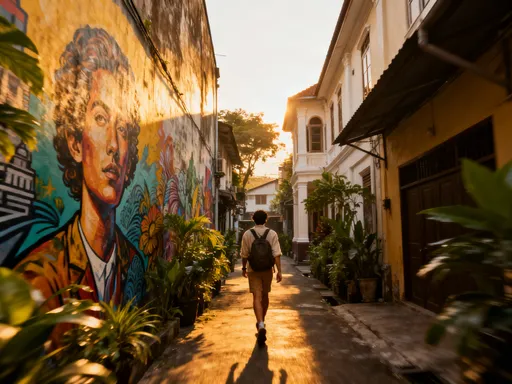
In many cities, graffiti is seen as a sign of neglect. In Sicily, it is increasingly becoming a language of renewal. From the outskirts of Palermo to the working-class neighborhoods of Syracuse, street art is not vandalism—it is conversation. Large-scale murals, stencils, and mosaics transform blank walls into storytelling canvases, addressing themes of identity, memory, and social justice.
The ZEN district of Palermo—once one of the city’s most marginalized areas—has become a hub for this artistic movement. What began as illegal tagging has evolved into a recognized form of cultural expression. Artists like Alika, a local pioneer, use walls to challenge stereotypes about poverty and crime, replacing them with images of dignity, resilience, and hope. One mural depicts a young girl reading a book, her hair flowing into a river of words—a tribute to the power of education in underserved communities.
In Syracuse’s Ortigia island and surrounding neighborhoods, street art blends historical reverence with modern commentary. A wall near the ancient Greek theater features a portrait of Archimedes rendered in vibrant spray paint, his eyes reflecting the sea. Another mural in the Akradina district shows a fisherman holding a net filled not with fish, but with books and musical instruments—symbolizing the cultural wealth of a community often overlooked.
These works are not commissioned by the government but emerge from grassroots collaborations. Local collectives organize festivals, inviting artists from across Italy and beyond to paint in exchange for room and board. The result is a living gallery that changes with the seasons. More importantly, it shifts public perception. Where there was once fear or indifference, there is now curiosity and pride. Street art, in this context, does not just beautify—it heals.
The Rise of the Sicilian Piazza
If the courtyard is the private heart of Sicilian life, the piazza is its public soul. More than just a town square, the piazza is a stage for daily rituals, a place where generations meet, gossip flows, and community is reaffirmed. At dawn, elderly men gather for espresso at sidewalk tables. By midday, mothers push strollers in circles, following an unwritten tradition. As evening falls, the passeggiata begins—a leisurely stroll where families, couples, and friends walk not to go anywhere, but to be seen and to see.
This rhythm is universal across Sicilian cities, yet each piazza has its own character. In Noto, the Piazza del Municipio is a masterpiece of late Baroque urban design—symmetrical, elegant, and flooded with golden light at sunset. Here, recent renovations have prioritized pedestrian access, reducing car traffic and expanding café seating. The result is a space that honors history while embracing modern needs. Benches are placed for conversation, not just seating; lighting is soft, encouraging lingering after dark.
In smaller towns like Modica or Ragusa, the piazza often wraps around a cathedral, its steps serving as impromptu gathering spots. On feast days, the square fills with music, food stalls, and religious processions. But even on ordinary days, it remains active. Children play football with a rolled-up sock, teenagers share gelato, and shopkeepers close their stores early to join friends for aperitivo. The piazza is not programmed—it evolves organically, shaped by the people who use it.
Urban planners are beginning to recognize the piazza’s role in social well-being. In Catania, the redesign of Piazza Dante included wider sidewalks, native plantings, and shaded areas—small changes that make a big difference in comfort and usability. These thoughtful interventions ensure that the piazza remains relevant, not just a relic of the past but a living space for future generations.
Market Days: Where Culture and Commerce Collide
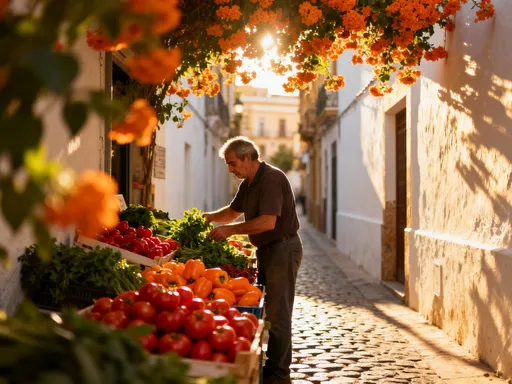
Sicily’s urban markets are not just places to buy food—they are cultural institutions. To visit one is to step into a sensory world where commerce, tradition, and community intersect. Each city has its own rhythm: Trapani’s market buzzes with the catch of the day—tuna, sardines, and tiny red shrimp—while Messina’s Vucciria echoes with the same name but a different flavor, where olives spill from burlap sacks and women haggle over the price of artichokes.
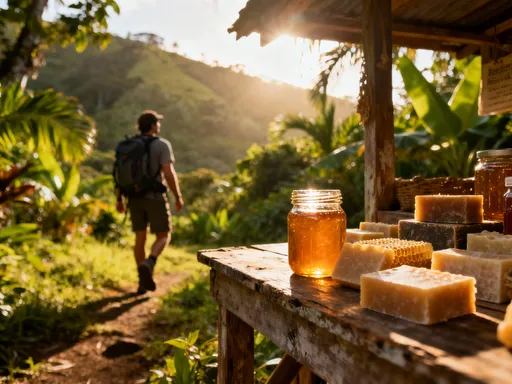
In Modica, the market unfolds in the shadow of the San Giorgio Cathedral. Stalls sell not only produce but also handmade ceramics, woven baskets, and local honey infused with wild thyme. The air is thick with the scent of fresh bread and fried arancini. But beyond the goods, it is the human interactions that define these spaces. A vendor remembers a customer’s preference for less salt in their cheese. A grandmother teaches her granddaughter how to pick the ripest eggplant. These moments, repeated daily, are the invisible threads that hold communities together.
What makes these markets resilient is their authenticity. Unlike tourist-oriented bazaars, they serve local needs first. They are also deeply seasonal. In spring, wild asparagus and fava beans dominate. In summer, peaches, figs, and prickly pears take over. In autumn, mushrooms and chestnuts appear. This connection to the land reinforces a culinary identity that is both regional and deeply personal.
Some markets are also becoming centers for sustainability. In Palermo, a growing number of vendors now use reusable containers and avoid plastic. Others promote organic farming and short supply chains. These shifts reflect a broader awareness without sacrificing tradition. The market, in this sense, is not just surviving—it is evolving, proving that commerce and culture can coexist in harmony.
Why Urban Sicily Deserves the Spotlight
For decades, travel to Sicily has focused on its coastline, its ancient temples, and its postcard landscapes. And rightly so—these are treasures. But in doing so, we have overlooked something equally valuable: the living, breathing cities that pulse with history, creativity, and resilience. Urban Sicily is not a backdrop. It is the story.
What makes these cities compelling is not perfection, but authenticity. They do not cater to idealized notions of Mediterranean charm. They are loud, layered, and sometimes messy. But within that complexity lies a profound sense of place. Here, history is not confined to museums—it spills into the streets, shapes the architecture, flavors the food, and informs the way people live.
There is also a quiet revolution underway. Through street art, garden restoration, market preservation, and piazza redesigns, Sicilians are reclaiming their urban spaces with pride and purpose. These efforts are not driven by tourism dollars alone, but by a desire to honor their heritage while building a more livable future.
For the traveler, this means an invitation—not to observe, but to participate. To slow down. To wander without a map. To accept an espresso from a stranger, to ask about the recipe for caponata, to sit in a courtyard and listen to the wind in the lemon trees. Urban Sicily rewards presence. It asks not for perfection, but for curiosity.
So the next time you think of Sicily, look beyond the shore. Step into its cities. Let the noise wash over you. Follow the scent of frying panelle down a narrow alley. Peek through a half-open gate into a hidden garden. Listen to the stories painted on the walls. This is where the island truly lives—not in the past, but in the everyday. And once you’ve felt it, you’ll understand: Sicily’s greatest secret isn’t its temples or its beaches. It’s its streets.