Lost in the Wild Beauty of Northern Ireland: A Slow Travel Awakening
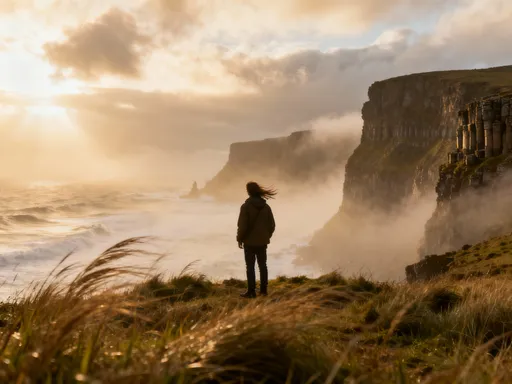
Imagine trading packed tour buses for quiet country lanes, where time slows and landscapes whisper stories. I spent six weeks exploring Northern Ireland not as a tourist, but as a traveler with purpose. From misty cliffs to cozy village pubs, slow travel revealed a side of this stunning region most people miss — authentic, peaceful, and deeply moving. Without the pressure to check off landmarks, I found myself immersed in rhythms older than tourism: the toll of a church bell at dusk, the laughter in a generations-old inn, the silence of a lakeside at dawn. This journey was not about how far I went, but how deeply I stayed.
Why Slow Travel Fits Northern Ireland Perfectly
Northern Ireland, though small in size, carries an outsized depth of character, history, and natural beauty. Its landscape spans dramatic coastlines, serene lakes, ancient woodlands, and vibrant towns shaped by centuries of tradition. This richness is best appreciated not in passing, but through presence. Slow travel — the practice of immersing oneself in a destination over days or weeks, embracing local rhythms and minimizing haste — finds a natural home here. The region’s compact geography allows for deep exploration without exhausting travel, making it possible to return to the same hillside at different times of day, or revisit a village market to recognize familiar faces.
What makes Northern Ireland especially suited to this approach is its cultural texture. History here is not confined to museums; it lives in conversation, in song, in the names of streets and the stories behind them. Rushing through risks reducing these layers to postcard scenes. By contrast, slow travel fosters connection. Staying in one place for several nights, shopping at the same bakery, or joining a community event creates space for genuine interaction. A simple chat with a shopkeeper might unfold into an invitation to a local gathering, or a recommendation for a hidden walking trail known only to residents.
The philosophy of slow travel aligns with the region’s own pace. In rural areas, life unfolds with a quiet consistency — farmers tending fields at first light, fishermen mending nets by the harbor, families gathering in village halls for music and storytelling. These rhythms invite travelers to step off the clock and into the moment. Rather than measuring success by how many attractions were visited, the slow traveler measures it by how much they felt, remembered, and understood. This deeper engagement transforms sightseeing into meaningful experience, allowing Northern Ireland to reveal itself not as a checklist, but as a living, breathing place.
The Coastal Wonders: Causeway Coast as a Living Landscape
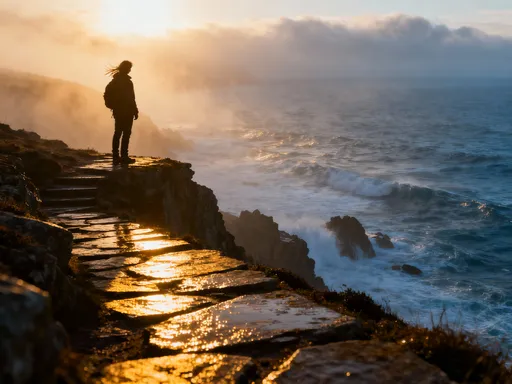
The Causeway Coast is often celebrated for its crown jewel — the Giant’s Causeway, a UNESCO World Heritage Site formed by ancient volcanic activity. Its hexagonal basalt columns rise dramatically from the sea, a geological marvel that draws visitors from across the globe. Yet, when approached with a slow travel mindset, this coastline becomes far more than a single landmark. It transforms into a living landscape where nature, myth, and daily life intertwine. Staying in nearby villages like Bushmills or Ballintoy for several days allows travelers to witness the coast in its many moods — fog-laced mornings, golden sunsets, and the wild energy of storm-tossed waves.
One of the most profound experiences of slow travel along this stretch is watching the sunrise over the Causeway. Arriving before dawn, when the crowds are absent and the air is still, brings a sense of intimacy with the place. The first light catches the stone columns, casting long shadows and revealing textures invisible during midday glare. This quiet moment offers a connection that no guided tour at noon can replicate. Similarly, hiking lesser-known trails such as the Shepherds’ Path — a rugged, unofficial route that offers stunning coastal views — becomes a personal journey rather than a tourist trek.
Beyond the scenery, slow travel opens doors to local life. In Ballintoy, a small fishing village perched on the cliffs, conversations with fishermen reveal stories of generations spent on these waters. They speak of changing tides, both literal and cultural, and the challenges of sustaining a way of life in a modern world. Visiting the village harbor, where boats bob gently beside weathered piers, one gains a deeper appreciation for the human dimension of this landscape. Dining at a family-run seafood restaurant, where the catch of the day is still warm from the sea, reinforces the connection between land, sea, and table.
The myths surrounding the Giant’s Causeway — such as the legend of Finn McCool, the giant who built the causeway to challenge a rival in Scotland — gain new resonance when heard from a local storyteller over a pint in a snug pub. These tales, passed down through generations, are not mere entertainment but part of a living cultural heritage. By taking the time to listen, travelers move beyond sightseeing into understanding. The Causeway Coast, when experienced slowly, becomes not just a destination, but a story in which one can play a small, respectful part.
Into the Heart of the Countryside: Fermanagh’s Lakes and Hidden Villages
County Fermanagh, nestled in the southwest of Northern Ireland, offers a world apart from the bustle of cities and tourist hubs. Here, a labyrinth of interconnected lakes — the largest being Upper and Lower Lough Erne — weaves through rolling hills, ancient woodlands, and quiet villages. It is a region defined by water, stillness, and a deep-rooted sense of place. For the slow traveler, Fermanagh is a sanctuary. Staying in a traditional stone cottage on the shores of Lower Lough Erne provides the perfect base for immersion. Waking to the sound of lapping water, watching mist rise from the lake at dawn, and spotting herons and kingfishers along the reeds becomes part of a daily rhythm.
One of the joys of slow travel in Fermanagh is the opportunity for unhurried exploration. Kayaking at sunrise, when the lake is smooth as glass, allows for silent movement through a landscape that feels untouched. Paddling toward Devenish Island, a small wooded isle in the middle of the lough, brings one face to face with centuries of history. The island is home to a well-preserved monastic site dating back to the 6th century, including a round tower, high crosses, and the ruins of a church. Spending hours here — walking the pathways, reading the inscriptions, sitting in quiet contemplation — fosters a deep sense of continuity and reverence.
The villages of Fermanagh, such as Enniskillen and Irvinestown, are small but vibrant, with family-run shops, cozy cafés, and a strong sense of community. Eating at a local inn, where meals are prepared with ingredients sourced from nearby farms, reinforces the connection between people and place. Conversations with innkeepers often lead to personal recommendations — a hidden walking trail, a community music session, a farmers’ market happening the next day. These moments of connection are the hallmark of slow travel, where spontaneity and trust replace rigid itineraries.
Fermanagh’s remoteness is not a barrier, but a gift. Without the pressure of ticking off attractions, travelers can align their pace with nature’s own. A rainy afternoon becomes an invitation to read by the fire, to chat with locals over tea, or to explore a nearby heritage center at leisure. This alignment with natural and human rhythms fosters a rare kind of peace — one that lingers long after the journey ends. In Fermanagh, slow travel is not just a choice; it is the only way to truly know the soul of the place.
Culture at Its Core: Derry/Londonderry’s Story Through Time
Derry, also known as Londonderry, is one of Northern Ireland’s most historically significant cities, and one of its most culturally rich. Encircled by 17th-century walls — the only fully intact city walls in Ireland — Derry stands as a testament to resilience, complexity, and renewal. For the slow traveler, spending multiple days here allows for a deeper understanding of the city’s layered identity. Rather than viewing it through the lens of conflict alone, one begins to see its vibrant arts scene, its strong literary tradition, and its warm, welcoming people. The city’s story is not frozen in time; it is alive, evolving, and deeply human.
Walking the city walls with a local guide offers one of the most powerful experiences in Derry. These 1.5-kilometer fortifications, built in the 1600s, provide panoramic views of the city and the River Foyle. But more importantly, they serve as a narrative thread, connecting past and present. Guides share personal stories — of growing up during the Troubles, of community efforts toward reconciliation, of cultural revival. Murals, once symbols of division, now include works that celebrate peace, music, and shared heritage. The Free Derry Corner, a historic site in the Bogside neighborhood, stands as a reminder of resistance and change.
Spending time in Derry means engaging with its daily life. Sipping tea in a Northland café, where locals gather for morning conversation, or browsing a small bookshop that features works by Northern Irish authors, fosters a sense of belonging. Attending a traditional music night in a pub like Peadar O’Donnell’s allows one to experience the city’s soul through song. The fiddle, flute, and bodhrán fill the room, and strangers become companions through shared rhythm. These moments of cultural exchange are not performative; they are genuine expressions of identity and community.
Derry’s cultural institutions, such as the Tower Museum and the Craft Village, offer further depth. Exhibits on the city’s maritime history, civil rights movement, and artistic legacy provide context that enriches the walking experience. Yet, it is the informal interactions — a chat with a street artist, a recommendation from a librarian, a shared laugh at a market stall — that leave the most lasting impressions. By slowing down, travelers move beyond observation into participation. They begin to see Derry not as a place of division, but as a city of dialogue, creativity, and hope.
Nature’s Sanctuary: Exploring the Glens of Antrim Without Rush
The Glens of Antrim, a series of nine narrow valleys carved by glacial rivers along the northeastern coast, represent one of Northern Ireland’s most breathtaking natural regions. Each glen possesses its own distinct character — from the waterfalls of Glenariff to the coastal cliffs of Glenarm — yet all share a sense of seclusion and wild beauty. For the slow traveler, these glens offer the perfect opportunity to disconnect from speed and reconnect with nature. Cycling through Glenariff Forest Park, where wooden walkways wind past cascading waterfalls and ancient oak trees, one moves at a pace that allows for full sensory immersion. The scent of damp earth, the sound of rushing water, the dappled light through the canopy — these details are lost to those who rush.
Hiking in Glenarm, one of the lesser-visited glens, reveals quiet trails that lead to hidden coves and panoramic viewpoints. The Glenarm Estate, a historic property with roots in the 17th century, has embraced sustainable tourism by opening its grounds to visitors, offering guided walks, organic farm tours, and estate-grown dining experiences. Eating at the estate’s restaurant, where lamb is raised on nearby hills and vegetables come from the kitchen garden, reinforces the value of local stewardship. These practices reflect a growing movement across Northern Ireland to balance tourism with environmental care.
Staying overnight in a guesthouse within the glens allows travelers to experience the landscape in its full range — the stillness of night, the chorus of birds at dawn, the changing light on the hills. Without the need to return to a distant hotel, one can explore the same trail at different times, noticing how the mood of the place shifts with the hours. A path that feels energetic in the morning may feel meditative in the evening. This kind of repeated engagement fosters a deeper bond with the land.
The Glens of Antrim also exemplify how slow travel supports rural economies. By choosing locally owned accommodations, eating at family-run restaurants, and participating in community-led tours, travelers contribute directly to the preservation of these areas. Their presence becomes part of a sustainable cycle — one that values authenticity over convenience, and conservation over consumption. In the glens, slow travel is not just a personal choice; it is an act of care for the places we love.
Practical Slow Travel: Transport, Stays, and Rhythms That Work
Embracing slow travel in Northern Ireland does not require hardship or sacrifice. With thoughtful planning, it can be comfortable, accessible, and deeply rewarding. The key lies in aligning logistics with the philosophy of presence. Public transportation, particularly local buses and regional trains, offers a sustainable and scenic way to move between towns and regions. While schedules may be less frequent than in urban centers, they encourage flexibility and patience — essential qualities for slow travel. The journey itself becomes part of the experience, with views of patchwork fields, coastal inlets, and distant mountains unfolding through the window.
Accommodation choices play a crucial role. Booking bed and breakfasts (B&Bs) or self-catering cottages for stays of three nights or more allows travelers to settle in, form connections with hosts, and establish a home base. Many B&B owners are eager to share local knowledge — favorite walking routes, upcoming farmers’ markets, or family recipes. These personal touches enrich the journey in ways that hotels often cannot. Staying longer in one place also reduces the environmental impact of constant packing and unpacking, aligning with sustainable travel principles.
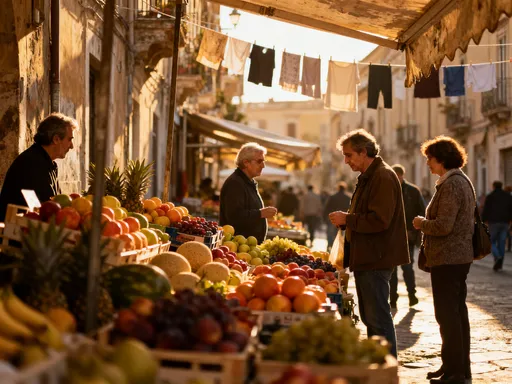
Eating seasonally and locally is another cornerstone of slow travel. Northern Ireland’s food culture is rooted in fresh, regional ingredients — dairy from lush pastures, seafood from cold Atlantic waters, vegetables from small family farms. Visiting farmers’ markets, such as the one in Belfast’s St. George’s Market or smaller village fairs, supports local producers and offers a taste of authentic flavors. Preparing simple meals in a cottage kitchen, using ingredients bought that morning, becomes a ritual of mindfulness and connection.
Planning around weather and local events further enhances the experience. Northern Ireland’s climate is changeable, but rain need not disrupt a slow journey. A sudden downpour can lead to an unexpected visit to a heritage center, a long conversation in a café, or a quiet afternoon reading by the fire. Similarly, aligning travel with community events — a harvest festival, a music session, a craft fair — provides insight into local life and creates memorable moments. The rhythm of slow travel is not rigid; it is responsive, adaptive, and deeply human.
The Lasting Impact: How Slowing Down Changes the Way We Travel
The true measure of a journey lies not in the distance covered, but in the transformation it brings. My six weeks in Northern Ireland did more than show me beautiful places — they reshaped my understanding of what travel can be. Slowing down allowed me to listen more, to notice more, and to care more. It taught me that connection is not found in speed, but in presence. The friendships formed with locals, the quiet moments by the lake, the stories shared over tea — these are the memories that endure, long after the photographs fade.
Slow travel is not merely a style; it is an ethic. It challenges the modern impulse to consume destinations like products, to rush from one highlight to the next. Instead, it invites us to engage with places and people with humility and respect. In Northern Ireland, where history is so deeply felt and nature so profoundly present, this approach feels not just appropriate, but necessary. It honors the land, supports communities, and fosters personal growth.
The impact extends beyond the individual. When travelers choose to stay longer, spend locally, and move gently, they contribute to a more sustainable and equitable tourism model. They help preserve the authenticity of places that might otherwise be lost to overcrowding and commercialization. In doing so, they become stewards, not just visitors.
As we look to the future of travel, the lessons of Northern Ireland offer a guiding light. We need not go farther to see more. We need only go deeper. By seeking meaning over milestones, connection over convenience, and stillness over speed, we rediscover the heart of why we travel in the first place — to understand the world, and ourselves, a little better. Let this be the invitation: to slow down, to stay longer, and to let the wild beauty of places like Northern Ireland transform not just your trip, but your life.